
Enhance vs Unbundle vs Reinvent Email: Top 5 That Are Actually Reinventing Email
Enhance vs Unbundle vs Reinvent Email: Top 5 That Are Actually Reinventing Email

Email usage among teens and young adults is decreasing, the future generation is not satisfied with email as it is today, and they are craving for replacements. This offers a huge opportunity in the market for some true innovation to reinvent email in order to fit their way of communicating.
According to TechCrunch and AppAnnie, email is dying among mobile’s youngest users. Those aged 13 to 24 who grow up with smart phones in their hands, are now spending 3.5X time in messaging apps than those over 45 years old. The older users still default to apps that replicate desktop functions, like email and web browsers.
Yet you still can’t kill email because it’s still our main tool for communicating at work and life. We use email for almost everything in our daily routine as both consumers and enterprises.
Fortunately, there are so many startups working on email as a big problem to solve for both consumers and enterprises. But although many of them promote their apps as reinventing email, they’re basically enhancing email, or in some cases, unbundling email. Only few of them are actually reinventing email.
Enhance vs. Unbundle vs. Reinvent:
# Enhancing Email:
Some startups are just enhancing email for productivity or security. This includes companies like:
- For productivity: MixMax, Nylas, SlideMail, Throttle, Easilydo, Inbox (by Gmail)….,
- For security: ProtonMail, ValiMail, and many many others.
- Here is a list of 50 older ones!
# Unbundling Email:
Others are working on taking parts of why we’re using email and mastering them!. For example:
- For internal team communication: Slack, Yammer, Asana, ….
- For external customer communication: Intercom, LiveChat, FreshDesk, Zapier, ….
- Here is a great post on unbundling email for work.
# Reinventing Email:
Startups in this segment are redesigning the whole email experience. They are including chat, mentions, hashtags, and some are even making email social! They’re completely changing the rules of the game. Below is a detailed list of the top 5 startups in this category.
The Top 5 That Are Actually Reinventing Email:
1. MailTime
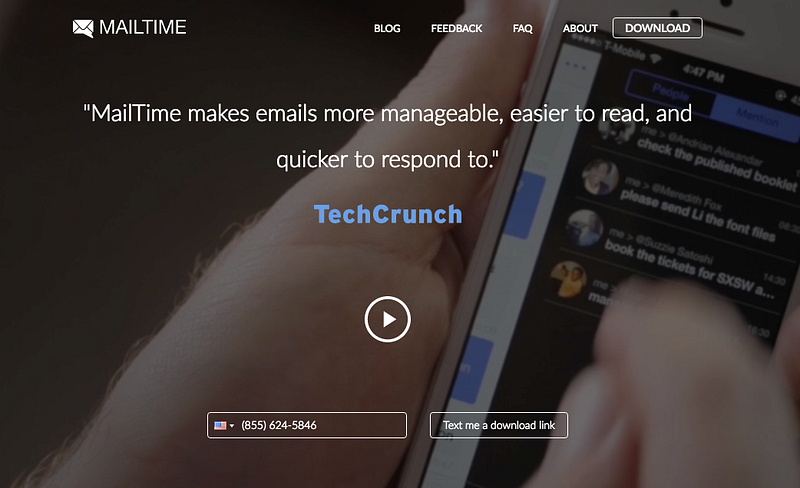
MailTime, a YC company with more than $3m in total funding so far, is an Email Messenger! It reformats your cluttered email threads into clean chat bubbles! It’s email as quick and easy as chatting without forcing all your contacts to download the same app. They sync all your desktop emails and smartly sort them into conversational emails and newsletters so you can deal with your inbox easily on the go.
2. RedKix
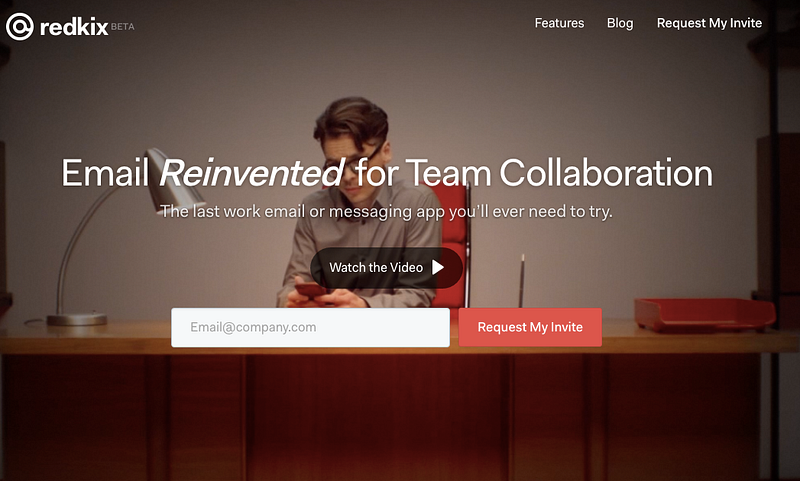
RedKix, with $17m in funding from Salesforce Ventures among other investors, converts your email messages to chat-like conversations, and people you you communicate with don’t have to have the app. But if they do, you can see live updates if they are responding now, just like in other chat apps. You can also create groups to keep all conversations with the same group in one place.
3. Missive
Missive, a Canadian seed stage startup, adds another layer on top of email. It’s like google docs for email where you can collaborate with someone to compose an email to someones else. You can also comment on emails within chat, you can chat within an email, or write an email/reply within chat! It also has chat room to organize your conversations.
4. Mainframe
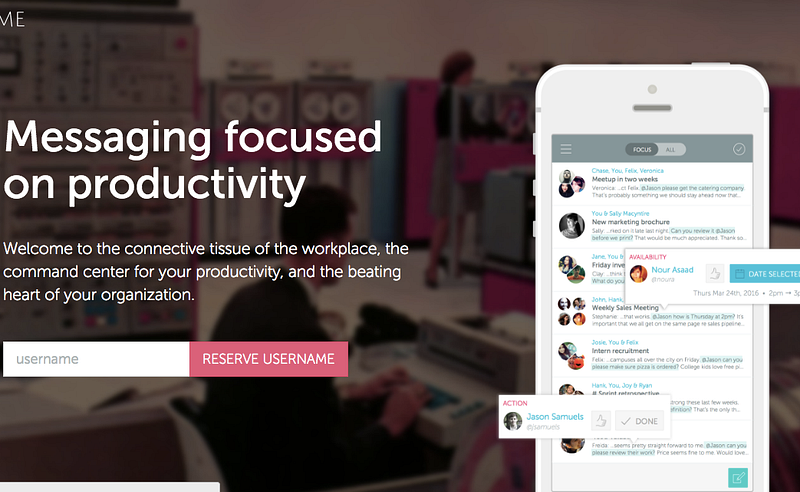
Mainframe, a British seed stage startup with $300k so far of funding, combines the new channel-based chat style with the old task-based email work style. So email will be truly your main tool all day long, and it manages all your tasks as if you have a personal assistant. You can mention others and include actions/tasks in the email message for yourself or others. It also has live updates for you to know who’s online and if someone is typing a reply.
5. MailTxtr
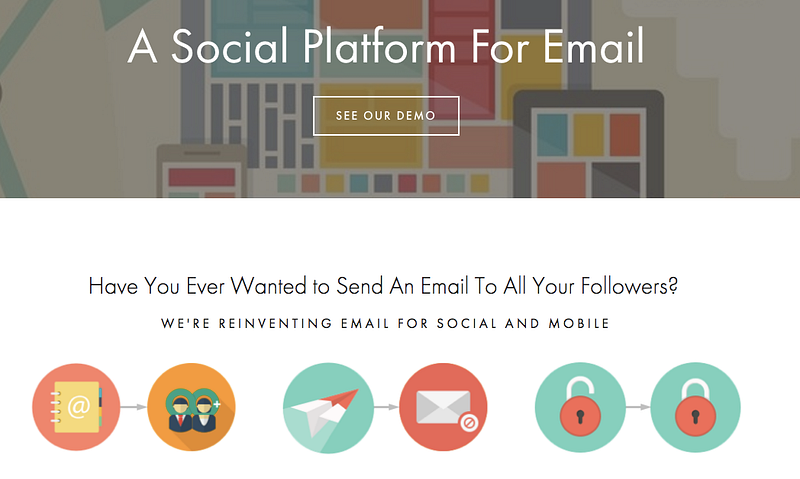
MailTxtr, a seed stage startup in San Francisco, is adding a social twist to email! Instead of email addresses, you just follow/unfollow people. It also allows you to mention and tag people in your emails. The email messages are shown in a social feed (like Instagram), not as an email inbox. You can send a private email to one/many followers or a public email to all your followers. Followers can reply via comments on your message, but they can’t send you a new message unless you’re following them too (this enables you to completely eliminate spam).
Do you know any other startups reinventing email? Please share them with us in the comments section.