
Are Asset Management Products Replacing Index Fund Managers and ETFs?
Are Asset Management Products Replacing Index Fund Managers and ETFs?
Early Beginnings
Buying bitcoin was a hassle at the early days, then platforms like Coinbase, Kraken and a few others made it easier, by bridging the gap between fiat and crypto worlds. Then came other crypto exchanges that did not allow any fiat currencies at all, but if you own Bitcoins, you can move them there and start buying other crypto assets.
The base currency for trading used to be either Bitcoin or Ethereum, but this was not good enough for investors and traders who wanted to measure the growth of their portfolios against a familiar and less volatile measure of value. Thus, came Tether, TrueUSD, DAI, USDCoin and many other stable coins. With this, the market was ready for next steps.
Copying Stock Markets
The number of exchanges and listed coins and tokens continued to increase despite the down market periods now and then. With this many assets, Indexes have emerged to provide a benchmark for evaluating the performance of portfolio strategies.
Following the footsteps of stock markets, fund managers launched Index Funds to offer investors an easy way to invest in the market. We’ve seen Top10, Top20, Top30 and Top100, copying S&P500. Others launched hedge funds to beat the market with more advanced portfolio strategies.
Crypto funds seemed to be a success for a while, but then reality hit and many have shut down this year. Crypto assets are too different than stocks and they can’t be managed the same way stocks are managed. Yet, we still hear news about people fighting for Bitcoin ETFs!
The high volatility of crypto assets drove crypto investors, who are mainly techies, to reconsider the justification of funds’ management and performance fees.
New business models for asset management had to be created to fit the unique nature of this new asset class.
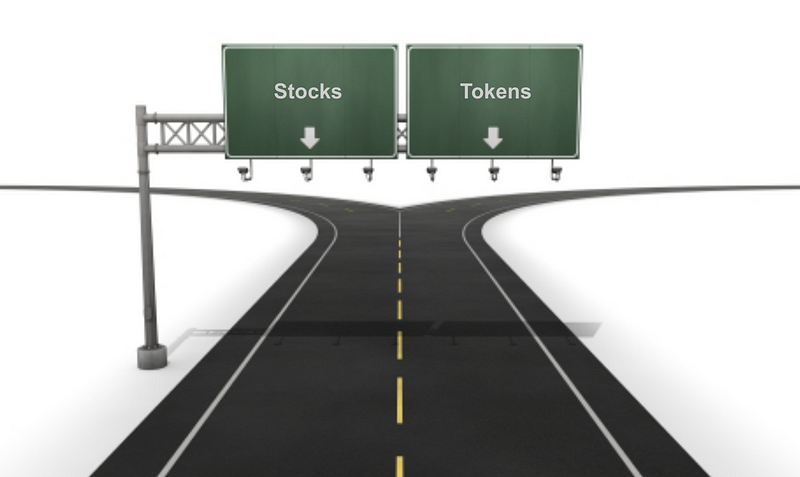
Stock vs. Crypto Assets
Crypto coins and tokens are digital and programable by nature (it’s basically code), and they bypass many of the hurdles stocks have. Crypto exchanges are not connected to a Depository Trust Company that takes T+2 days to settle trades, and for the majority of them, no banks or brokers are involved, and settlements are almost instantaneous compared to stocks.
In addition, you get to freely move your assets to any exchange or wallet of your choice. To help you see the picture here, think about this: Can you move your Apple stock from NASDAQ to NYSE to have all your assets in one platform? Or can you move it to your own wallet outside the exchange? Can you sell it without the need for the exchange? In stocks, exchanges are monopolistic intermediaries you can’t avoid, but in crypto, you have more freedom, and exchanges compete to add more value to you.
Bundles vs. Index Funds
While traditional fund managers are still launching new crypto index funds, smart techies and software engineers, who truly understand the nature of this new asset class, have already started innovating to create new replacements for index funds to avoid management fees!
CoinBundle, A YC company started a new trend of bundling groups of coins/tokens together based on specialization, and with already allocated weights, and sell it in packages. Coinbase and Circle also launched Coinbase-Bundles and Circle-Collections to make it easier for their customers to buy a basket of coins with one click. They also provided dashboards to track the performance of your bundles over time, and compare it with the overall market performance, so you don’t really need apps like Delta or Blockfolio.
But still, an index fund will do more than that. It will do all the rebalancing for you to reduces your risk exposure by maintaining the desired asset allocation and weights, so you don’t have to keep selling/buying assets every month/week/day. In a way this might justify the expensive management fees. Well, software is replacing them for you!
Companies like Shrimpy, 3Commas, Hodlbot, and Nazcabot offer free basic rebalancing, and charge you $10–$20 a month for advance features no matter how big your portfolio is. They don’t even hold your assets, you connect with the exchange you prefer and the software does the buying/selling for you on that exchange.
Other companies go even deeper than that and provide more advanced trading strategies and trading bots powered by AI. They continuously collect data and news about coins and tokens and react faster than any human can. This basically replaces not only index funds, but also mature hedge funds that charge hefty performance fees, but this might be fa topic or another blog post.
Auto Rebalanced Bundles vs. ETFs
I would argue that this is still a hassle compared to ETFs. You still have to first buy the assets, move them to an exchange, connect to a rebalancing software, set your allocations, and then set your rebalancing periods.
I think the next step in the market would be selling auto-rebalanced bundles. People can buy a bundle, or even a basket of bundles, and that’s it. Bundles can be very diverse, they can also include a stable coin to replace bonds. Then, in partnerships with exchanges behind the scenes, the platform will keep rebalancing the portfolios, and provide a dashboard for people to track the performance of their assets and portfolios, and compare with the market performance.
It’s like combining:
As markets mature, last movers get to benefit from all early experiments, and then build something that makes more sense, and offer a complete solution to customers.
Equity Token Bundles vs. Stock ETFs
Now, imagine if all this flexibility is not only for cryptocurrencies and utility tokens, but also for Equity Tokens! All the above features of coin bundles can also be applied to equity token bundles.
Platforms like Securitize and Polymath are helping more companies tokenize their equity, and equity token exchanges like OpenFinance and tZero will be the new NASDAQs or NYSEs of the world, but with all the flexibility of crypto exchanges and without slow centralized settlement.
In the next 3–5 years, I believe that most of new startups will have equity tokens instead of traditional stocks to have “programable private liquidity”, and in 5–10 years most of the older traditional companies will start tokenizing their stocks to move to the new token economy.
Liquid Asset Fund Managers!
Many industries have been disrupted by software, and I think up-next is the liquid asset management industry. Financial analysts are already being replaced today by data scientists and software engineers who build bots and AI-algorithms in big traditional hedge funds.
But soon enough, those hedge funds won’t be justified as more retail and even institutional investors start using software platforms as their asset managers, and pay flat SaaS fees instead of a percentage of their capital and returns for management and performance fees.
Even more, with companies like Enigma that have already launched an open source python package called “Catalyst”, anyone can build their own bot, or use any open-source trading bot, then connect to any exchange of their choice for trade executions.
In my opinion, the only type of fund management firms that will be able to justify fund fees will be venture capital and ICO/STO funds where you still need a human mind to analyze the potential of new startups, although I believe they will also use Data Science and AI models to source new deals and to support their investment decisions.